Replace a missing tooth from start to finish at Dental House. Our team places your implant and restores it with a natural-looking crown, bridge, or full-arch smile, all in our Middletown office.

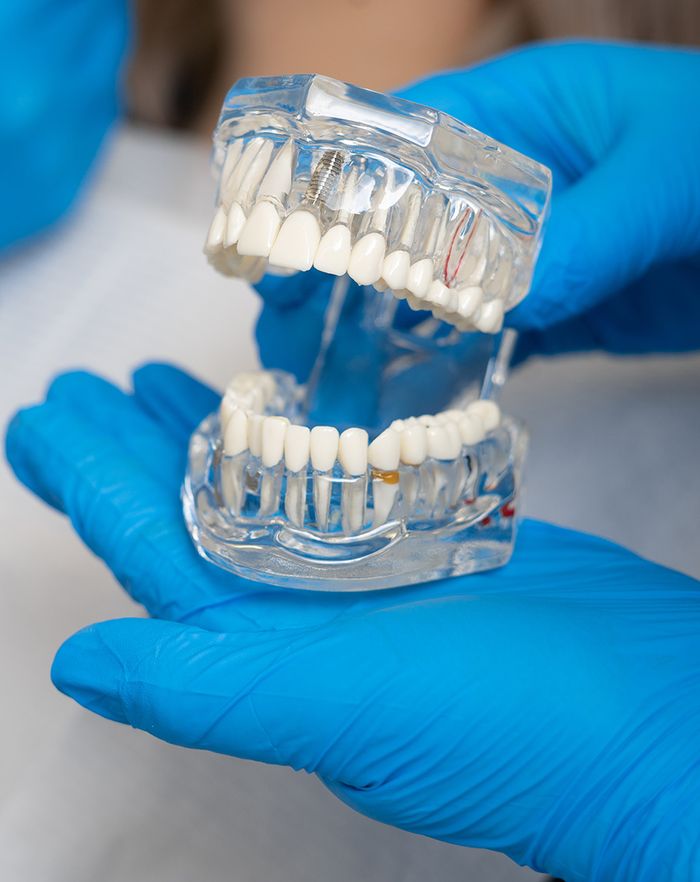
A dental implant has two parts: a post that replaces the tooth root and a restoration that replaces the tooth you see. Together, they give you a stable, natural-looking tooth that helps protect your jawbone and keeps your other teeth from shifting into the gap.


Every step of your implant treatment, from placing your implant to fitting your final crown, happens at our office on East Main Street.
This is the differentiator paragraph copy. This is the differentiator paragraph copy. This is the differentiator paragraph copy. This is the differentiator paragraph copy.

See real patient success stories.
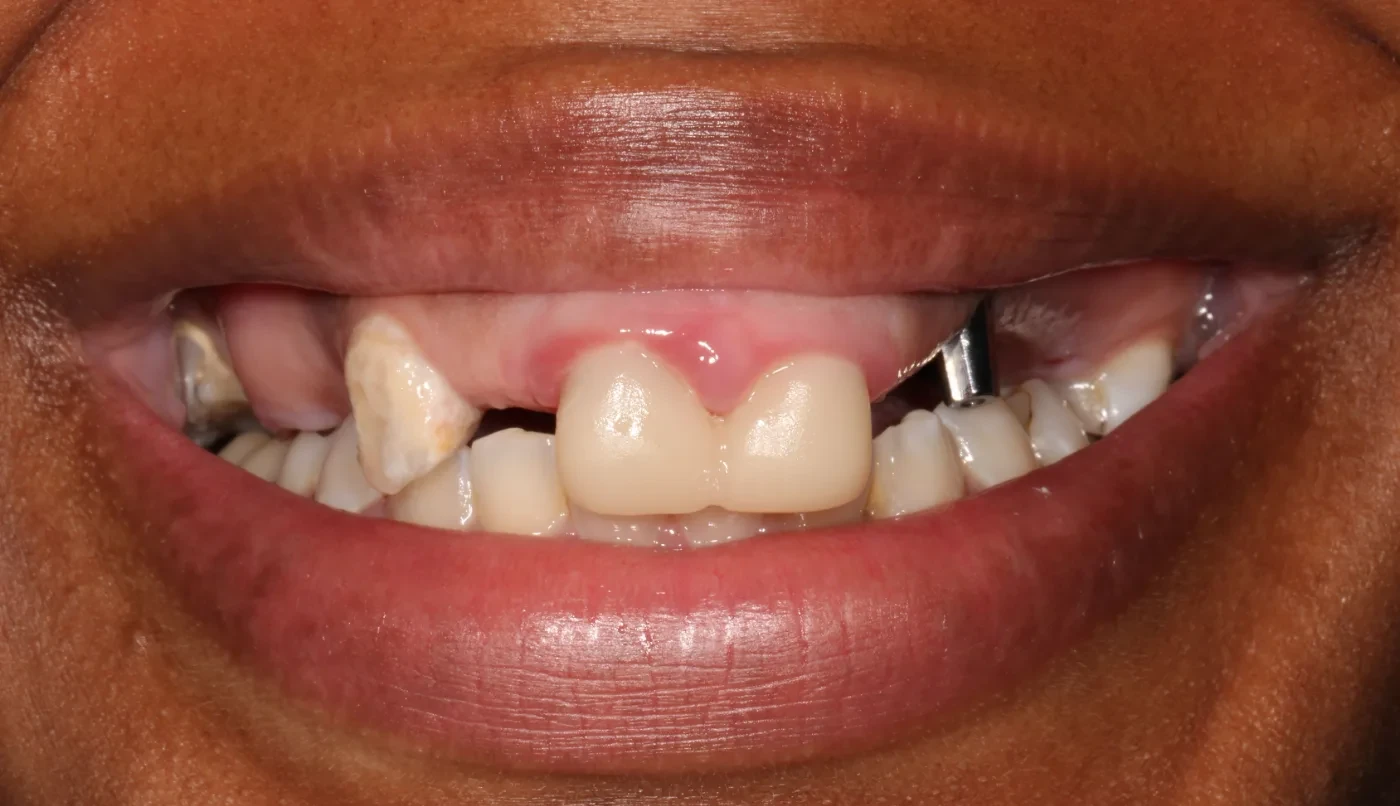
Implants are anchored in your jaw, so your new tooth stays put while you chew, smile, and talk. Most patients can go back to enjoying the foods they've been avoiding.
After a tooth is lost, the bone underneath begins to shrink. An implant takes the place of the root and keeps that bone in use, which also helps keep your other teeth from drifting into the gap.
With good home care and regular checkups, implants can last for decades, longer than traditional bridges or dentures.

Your treatment starts with an exam and a 3D CBCT scan so we can see your bone, nerves, and sinuses and plan the best position for your implant. On placement day, your dentist numbs the area and places the implant post in your jaw right here in our office.

Over the next 3 to 6 months, your implant bonds with your jawbone to create a strong base for your new tooth. You'll come in for follow-up visits so we can check your healing and take the impressions used to design your restoration.

Once you've healed, we fit your custom crown, bridge, or denture and check your bite. After a final adjustment, your restoration is secured to your implant, and you leave with a complete smile.

Dental crowns are the most common type of dental implant restoration, and they attach to one implant to restore a single tooth. Implant-supported bridges are also an option. These use two implants to support a row of 3+ missing teeth.
Implant-supported dentures are also an option for some patients. These are full rows of teeth that attach to 4-6 implants in the upper, lower, or both arches of your mouth. Depending on the type of denture, they may either be removable, or they may be permanently fixed in place.
The answer is usually “no.” Most dental insurance plans don’t cover any part of dental implant treatment, and this includes restorations. You will likely have to pay out of pocket. However, you can consult with your insurer and your policy information directly to learn more, and see if you can get coverage for your dental implant and/or implant restoration.
Most patients are surprised by how comfortable the procedure is. The area is fully numbed with local anesthesia, and sedation options are available if you feel anxious. Afterward, mild soreness and swelling are normal and are usually well controlled with the medication we prescribe or recommend. Many patients describe it as similar to having a tooth extracted.
The surgery itself is often completed in one visit, and most people return to normal activities within a few days. Initial soft-tissue healing takes about one to two weeks. The implant then needs roughly three to six months to fuse with your jawbone before the final crown is placed. Your timeline can be longer if you need a bone graft or an extraction first, and we will map it out for you at your consultation.
Coverage varies widely. Some plans pay a portion of the implant or crown, while others classify implants as elective. Our Middletown, DE team will verify your benefits and submit a pre-treatment estimate before you commit. Implants are generally an eligible expense for HSA and FSA accounts, and we offer financing so you can spread payments over time.
With good oral hygiene and regular checkups, dental implants can last 20 years or more, and often a lifetime. The crown attached to the implant usually lasts 10 to 15 years or longer before it needs replacing. Smoking, untreated gum disease and teeth grinding are the main risks to longevity.
Dental implants have one of the highest success rates in dentistry, generally cited above 95 percent. Success depends on your bone, your overall health and how well you care for them. We evaluate these factors before treatment to give you an honest picture of your outcome.
Most healthy adults with enough jawbone and healthy gums are candidates. Conditions such as diabetes, osteoporosis or gum disease do not automatically rule out implants, but they need to be managed. A consultation with a 3D scan at our Middletown, DE office is the only way to know for sure, and if you have bone loss we may recommend a bone graft first.
You can replace a missing tooth with an implant, a bridge or a partial denture. An implant replaces the tooth root, so it does not require grinding down healthy neighboring teeth and it helps keep your jawbone strong. It usually costs more upfront than a bridge but can be more economical over time because it lasts longer.
The process begins with a consultation and 3D scan, followed by any needed extraction or bone graft. We then place the titanium implant, and after it fuses with your bone over several months, we attach a custom crown. Each step is explained beforehand, and you will know what to expect at every visit.
A single implant, including the implant, abutment and crown, often falls in the range of roughly $3,000 to $6,000 nationally. Your cost depends on whether you need an extraction, bone graft or sedation. We provide a written estimate after your exam and can discuss financing and insurance benefits.

Monday - Thursday:
8am-5pm